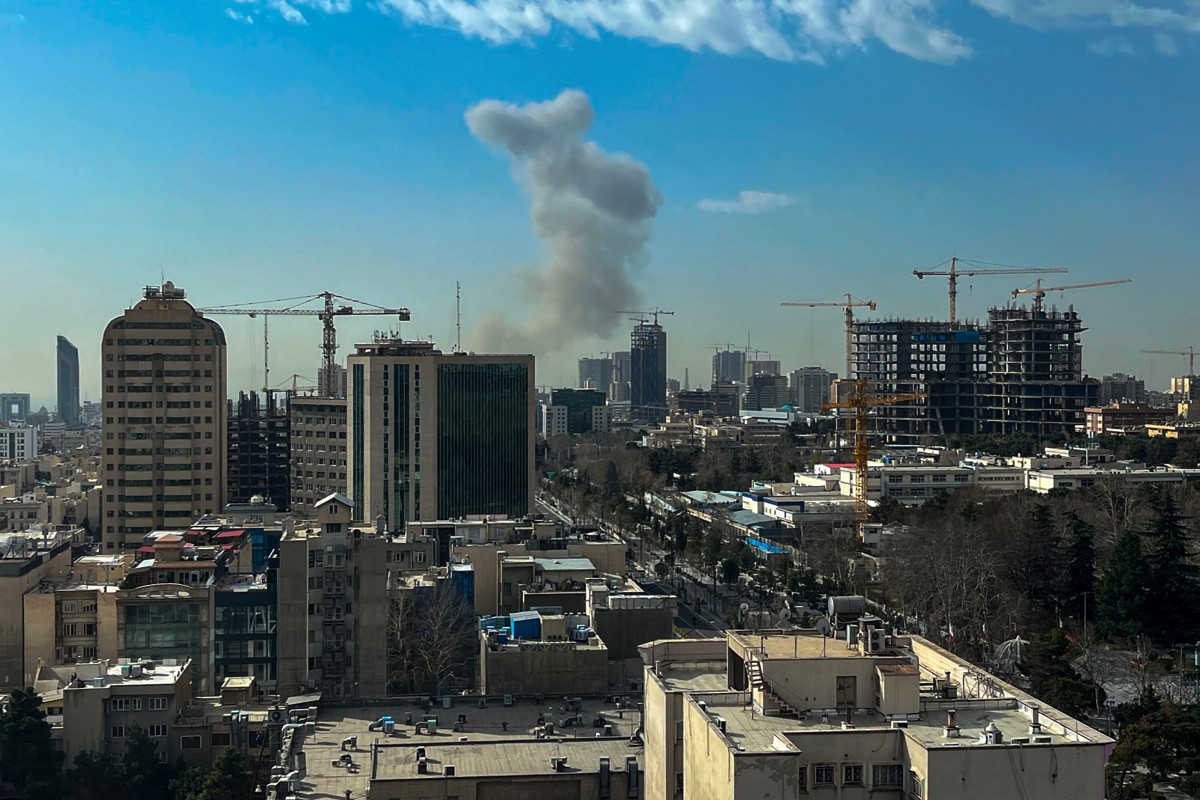
US-Israel-Iran Conflict Spurs Fears of Wider Global Energy Shock
The deepening conflict involving Iran and its regional rivals is rapidly morphing from a geopolitical flashpoint into a potential energy crisis with global consequences. Fresh attacks on critical energy infrastructure in the Gulf have unsettled oil and gas markets, reinforcing how heavily the world still depends on West Asia for fuel supplies.
An Iranian strike forced Saudi Arabia’s state oil major to suspend operations at its Ras Tanura complex -- one of the kingdom’s most important oil export hubs. Around the same time, Qatar temporarily halted liquefied natural gas (LNG) production after intercepting drones aimed at facilities in Ras Laffan Industrial City, home to one of the world’s largest LNG export terminals. The twin developments sent shockwaves through commodity markets.
European natural gas prices spiked sharply in response, underscoring how vulnerable global supply chains remain to disruptions in the Gulf. The broader concern is not limited to isolated strikes, but to a pattern: Iran has shown a willingness to target military-linked and strategic infrastructure in countries that host US forces. That raises the risk that energy installations across multiple Gulf producers could be drawn into the conflict.
A concentrated energy heartland
The structural issue is straightforward. A small cluster of Gulf nations dominates hydrocarbon production in West Asia, and by extension plays an outsized role in global supply.
In 2023, Saudi Arabia remained the region’s largest energy producer, with output nearing 28 quadrillion British thermal units (Btu), according to US Energy Information Administration data. Petroleum and liquids form the bulk of its energy mix, supported by substantial natural gas production.
Iran followed with roughly 19 quadrillion Btu, with a more balanced composition between crude oil and natural gas. The United Arab Emirates produced about 11 quadrillion Btu, primarily oil-driven, while Qatar generated close to 10 quadrillion Btu — heavily weighted toward natural gas. Iraq, Kuwait and Oman remain predominantly oil exporters, while Bahrain and Israel contribute comparatively smaller volumes.
Such concentration means that even limited interruptions can have outsized price effects. Markets are not merely reacting to current damage, but recalibrating risk premia across the energy complex.
Oil’s central role
Oil continues to anchor West Asia’s energy system. According to the International Energy Agency (IEA), crude and refined oil products accounted for 41.5 per cent of the region’s total energy supply in 2023. Total oil supply that year exceeded 15 million terajoules.
Over the past two decades, regional oil supply has expanded significantly, rising about 70 per cent since 2000. West Asia now accounts for roughly 8 per cent of global oil supply and about 31 per cent of global crude production — a reminder of its systemic importance.
Crude oil remains the backbone of regional economies. Extracted from onshore wells and offshore platforms, it is transported via pipelines and tankers to refineries where it is processed into petrol, diesel, aviation fuel and petrochemical feedstock. In 2023, the region produced more than 58 million terajoules of crude oil, reflecting steady expansion over the past two decades.
Refining capacity has also grown. Nearly all crude must be processed before use, and refined products underpin transport, manufacturing and industrial activity worldwide. West Asia refined over 18 million terajoules of oil products in 2023, with activity rising steadily since 2000. Petrochemicals derived from refining remain central to plastics, industrial materials and consumer goods.
Brent futures signal mounting risk
The financial markets are already pricing in heightened geopolitical uncertainty. On Tuesday, Brent crude oil futures traded above the $80-per-barrel threshold for a second straight session, reaching intraday highs near $82 -- the strongest levels in over a year.
Brent futures are standardised contracts that commit buyers and sellers to transact oil at a set price on a future date. Traded primarily on the Intercontinental Exchange, they serve as the global benchmark for pricing roughly two-thirds of internationally traded crude. While Brent refers to oil sourced from North Sea fields, in practice it functions as the reference price for much of the world’s seaborne crude trade.
The latest rally reflects more than immediate supply loss. Traders are factoring in the probability of broader disruption — particularly around the Strait of Hormuz, a narrow maritime corridor through which roughly one-fifth of global oil flows daily. Any sustained interruption there would tighten supply conditions dramatically.
When Brent futures rise sharply, it signals that markets anticipate tighter supply or greater risk ahead. Elevated futures prices feed into spot markets, long-term contracts and physical cargo negotiations. Over time, sustained price strength can translate into higher fuel costs for consumers, increased freight expenses, and broader inflationary pressures.
For now, physical supply losses remain limited. But the strategic calculus has shifted. With energy infrastructure increasingly within the crosshairs, the Gulf’s stability -- long assumed but never guaranteed -- is once again central to global economic resilience.
The looming question is not only how long the conflict persists, but how far it spreads -- and whether the world’s energy arteries can remain insulated from escalation.
🚨 CRISIS ALERT: Strait of Hormuz Closed by Iran
— Mr. Wadhwa (@sourabhwadhwa22) March 3, 2026
Iran has closed the Strait of Hormuz, warning it will set ablaze any ship attempting passage.
•The strait carries ~33% of global seaborne oil flows
•European gas prices surged 50%+ after QatarEnergy halted LNG production…
Popular Categories
Read More Articles

Politics
Munich Comes To Delhi: India's Seat At The Global High Table by Abhishek Tandon October 14, 2026
Education
CSR initiatives give Bahraich govt schools an infrastructure boost by Awadh 360° Desk October 5, 2026
Technology
Dyson’s new Rs 47,000 toothbrush can ‘see’ between your teeth. Would you pay? by Awadh 360° Desk September 3, 2026
Politics
Seven Streams, One Goal: Inside PM Modi's 'Saptadhara' Vision To Build A Viksit Bharat by Abhishek Tandon August 30, 2026