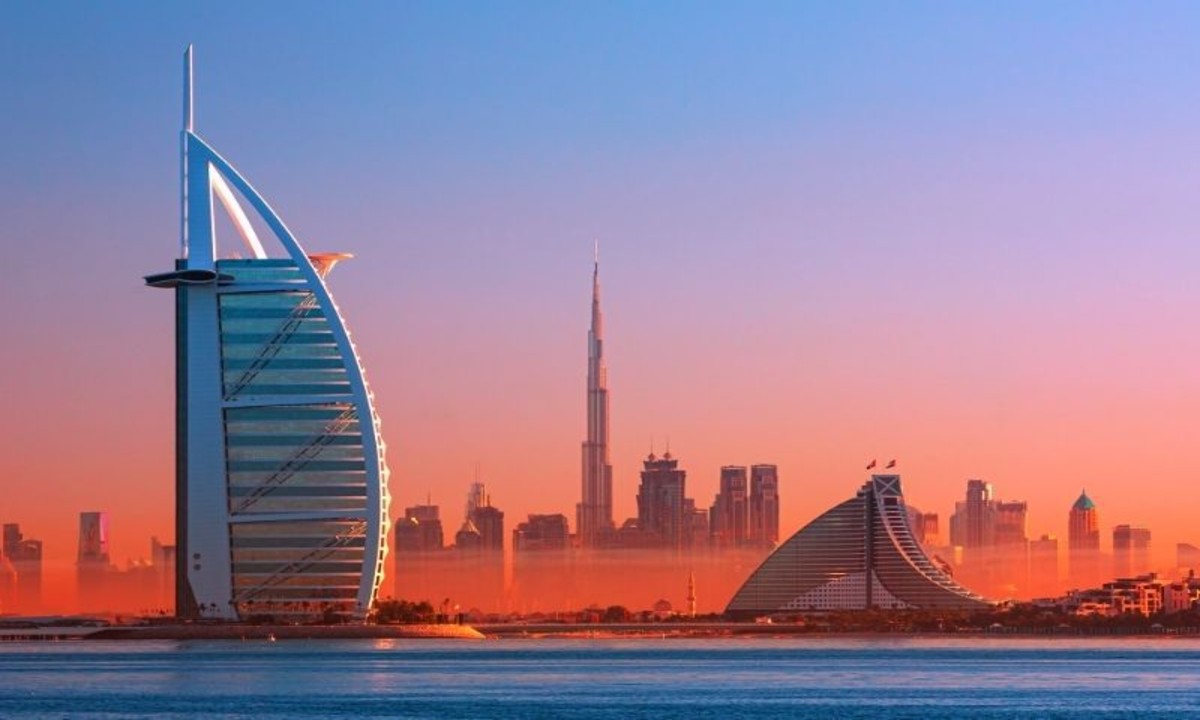
Gulf Corridor Disruption Ripples Through Global Tourism After US-Israel Strikes on Iran
The joint US–Israel military strike on Iran on 28 February has triggered a chain reaction that is now being felt far beyond the conflict zone — across airports, airlines and tourism markets worldwide.
What began as targeted military action quickly escalated into a regional aviation crisis. Within hours of retaliatory missile strikes across the Gulf, multiple countries shut or restricted their airspace. The closures — spanning the UAE, Qatar, Bahrain, Kuwait, Iran, Iraq and Israel — left a wide corridor of Middle Eastern skies nearly empty, disrupting one of the busiest aviation bridges in the world.
For global travel, and particularly for India, the consequences were immediate.
Transit Hubs Under Strain
The Gulf is not merely a destination market. It is the principal transit corridor linking India to Europe, North America and Africa. When that corridor slows or shuts, the impact spreads across leisure travel, migrant worker movement, business travel and long-haul connectivity.
At the centre of the disruption is Dubai International Airport, the world’s busiest airport for international passenger traffic and the backbone of global transit flows between East and West. Alongside hubs in Doha and Abu Dhabi, it operates on tightly coordinated “banks” of arrivals and departures. Aircraft land within narrow windows, passengers transfer, and onward flights depart in synchronised waves.
When inbound flights are delayed or cancelled, that system collapses quickly. One missed arrival can affect dozens of onward connections across continents.
Over the weekend, dramatic scenes emerged from Dubai after reported strikes near airport infrastructure. Operations were temporarily suspended, and airlines including Emirates, Etihad Airways and Qatar Airways announced widespread cancellations and route suspensions. UAE airports handled a combined 127.7 million passengers last year, underlining the scale of potential disruption.
Indian carriers were also forced to respond. Both Air India and IndiGo suspended flights to several Middle Eastern destinations as airspace closures expanded.
Shockwaves for Indian Aviation
For India, exposure to Gulf instability is structural. A large share of Indian passengers travelling to Europe and North America connect through Dubai, Doha or Abu Dhabi. When those hubs slow down, Indian aviation feels it immediately.
M.P. Bezbaruah, Secretary General of the Hotel Association of India and former Union Tourism Secretary, said the immediate fallout could be significant.
“It is an important transit bridge and will affect the movement of tourists considerably. However, the impact will depend on the scale of the conflict. It is too early to speculate how things will develop. The immediate impact is likely to be substantial,” he said, speaking in his personal capacity.
The disruption has moved beyond scheduling challenges. Rising geopolitical tension has pushed up oil prices, placing fresh pressure on aviation turbine fuel costs — already one of the largest expense components for airlines. At the same time, rerouted flights are flying longer paths to avoid restricted airspace, increasing fuel burn and crew costs.
Even an additional hour on a long-haul route significantly raises operating expenditure. Airlines must also manage diversions, additional ground handling, passenger accommodation and rebooking logistics. Aircraft utilisation declines as rotations become less efficient.
While airlines rarely pass these costs to passengers immediately, fare structures tend to firm up over time. Promotional inventory shrinks, flexible tickets become more expensive and advance booking discounts narrow.
Tourism Hesitation Sets In
Tourism is often among the first sectors to respond to uncertainty. It reacts not only to physical safety risks but also to perceptions — the possibility of being stranded in transit, facing sudden cancellations or navigating shifting advisories.
Ravi Gosain, President of the Indian Association of Tour Operators, said caution has emerged in the market, though panic is absent for now.
“Some travellers are postponing immediate departures, especially on long-haul routes via Gulf hubs, but we are not seeing large-scale cancellations as of now,” he said. “Prolonged uncertainty could delay bookings and push travellers towards short-haul or safer routes.”
Weekend leisure trips to Gulf destinations are particularly sensitive. These are often impulse-driven and are quickly deferred when airspace closures change daily. Corporate travel also tightens during such phases, with companies reducing non-essential movement and moving meetings online.
Inbound tourism to India could also feel the pressure. “India’s inbound tourism is slowly returning to pre-pandemic levels. The West remains the most important source market. The uncertainty and apprehension may affect traffic flow substantially,” Bezbaruah noted.
Behavioural Shift and Regional Realignment
Past crises suggest a predictable pattern. The first phase is operational — airspace closures, cancellations and diversions. The second involves government advisories and corporate travel restrictions. The third is behavioural: travellers postpone, rework or redirect their plans.
If Gulf instability persists, travellers may favour direct flights to avoid transit uncertainty. Southeast Asian destinations accessible without Gulf connections could see marginal gains. Domestic tourism may also benefit from deferred outbound demand.
“As happened during earlier disruptions, regional tourism tends to grow. India would do well to focus on South Asia and Southeast Asia. A part of the growing Indian outbound may also divert to domestic tourism,” Bezbaruah said.
Recovery Hinges on Stability
Aviation recovery depends less on a single announcement reopening airspace and more on consistent, stable operations over several weeks. Confidence rebuilds gradually, not overnight.
“If the conflict ends, past disruptions such as 9/11, Covid-19, the tsunami and the financial crisis show that tourism tends to bounce back quickly,” Bezbaruah said.
For now, aviation planners remain in contingency mode. Regulators are reviewing airspace conditions daily, airlines are adjusting schedules in real time, and governments have issued advisories urging caution.
The conflict may be centred in West Asia. But its aviation and tourism consequences are already global. For India in particular, the episode underscores a structural reality: disruption in the Gulf corridor reverberates across its entire travel ecosystem.
The skies may reopen soon. The economic aftershocks will take longer to settle.
Just as predicted!!
— Rattan Dhillon (@ShivrattanDhil1) March 1, 2026
Dubai heavily relies on Patriot and THAAD missile defense systems both manufactured in the 🇺🇸 United States.
The 🇦🇪 United Arab Emirates depends on US technology, US training, and US support for maintenance and integration.
That raises a serious question… https://t.co/8BWfrbKRGi pic.twitter.com/BSd5uzL83G
Popular Categories
Read More Articles

Politics
Munich Comes To Delhi: India's Seat At The Global High Table by Abhishek Tandon October 14, 2026
Education
CSR initiatives give Bahraich govt schools an infrastructure boost by Awadh 360° Desk October 5, 2026
Technology
Dyson’s new Rs 47,000 toothbrush can ‘see’ between your teeth. Would you pay? by Awadh 360° Desk September 3, 2026
Politics
Seven Streams, One Goal: Inside PM Modi's 'Saptadhara' Vision To Build A Viksit Bharat by Abhishek Tandon August 30, 2026