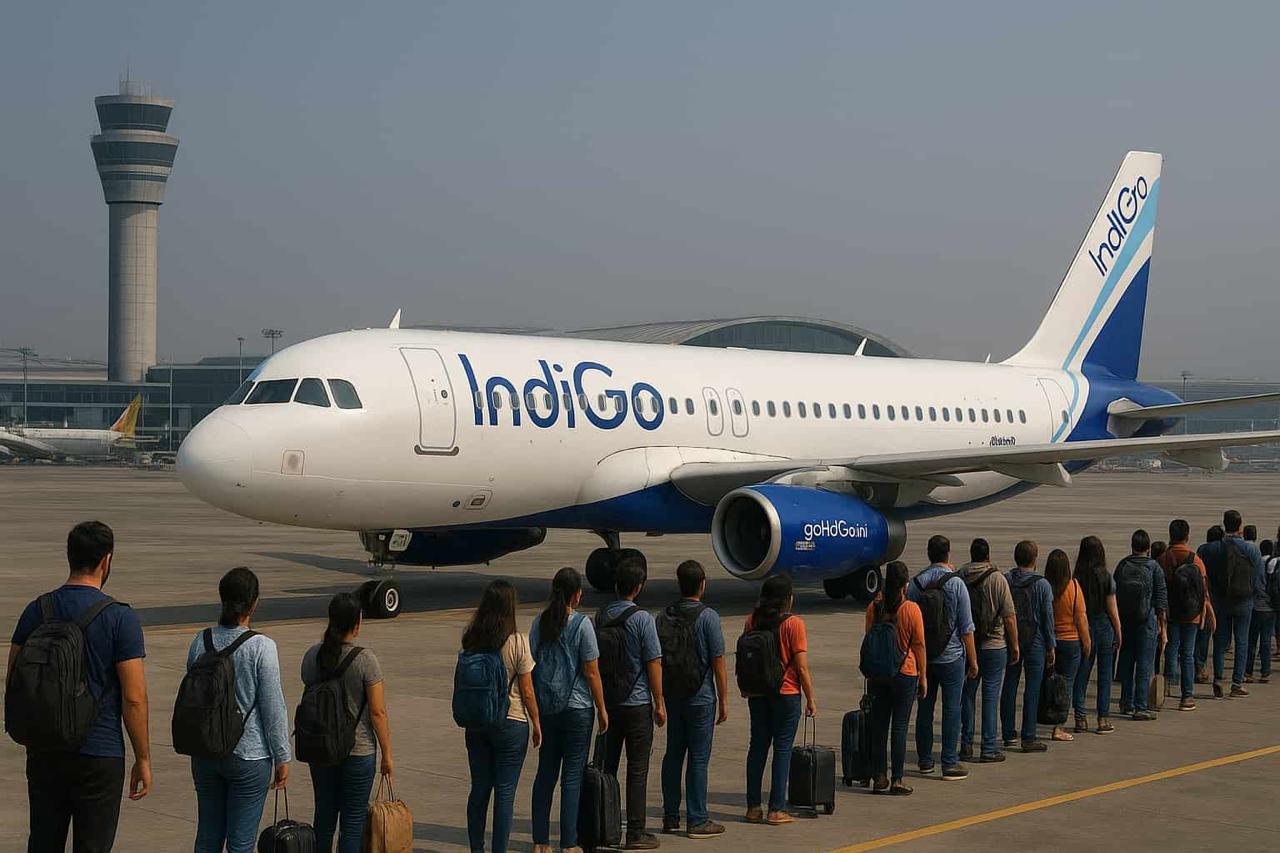
Why IndiGo Was Hit Hardest by the New Rest Rules, Pushing the DGCA to Ease Pilot Duty Limits
LUCKNOW IndiGo’s network has been in free fall for days, with more than 1,000 flight cancellations and hundreds of delays throwing major airports into chaos. While the new Flight Duty Time Limitation (FDTL) norms technically apply to every airline, IndiGo alone has been pushed into a full-blown operational crisis. The result, India’s aviation regulator the Directorate General of Civil Aviation (DGCA) has now walked back key parts of the rules, granting IndiGo a one-time exemption from night-duty restrictions and allowing pilot leave to once again count as weekly rest.
So what made India’s biggest airline, commanding over 60 per cent of the domestic market, so vulnerable?
A massive network built on tight utilisation
IndiGo operates more than 2,300 flights a day with over 400 aircraft, most of them single-aisle jets that squeeze in multiple trips daily. The airline has long depended on high aircraft utilisation and a lean crew structure to keep costs low. Other Indian carriers, meanwhile, are currently flying fewer hours because of grounded aircraft, delayed deliveries and slower expansion. This means they have more pilots relative to their active fleets, giving them room to absorb duty-time restrictions. IndiGo doesn’t.
Even a 10 per cent cancellation rate at IndiGo wipes out more than 230 flights. For Air India, which flies fewer than half as many daily services, the same percentage would cause far less disruption.
Heavy dependence on late-night flying
The new rules restrict night landings to two, down from six earlier, and expand the window defined as “night hours”. IndiGo runs some of the country’s largest banks of late-night and early-morning flights, the so-called red-eye operations. Once the second phase of FDTL kicked in last month, these flights burned through crew duty limits quickly, leaving IndiGo without enough pilots to operate its tightly packed schedule.
Other airlines, with fewer night operations and lower utilisation, didn’t hit the duty-hour ceiling as fast.
Crew planning stretched thin
IndiGo’s staffing model has long been run on the edge, and the new rest requirements, weekly rest increased to 48 hours from 36, pushed it over. The airline had months of notice about the new rules but continued with a lean manpower strategy. Pilot bodies argue that IndiGo froze hiring, restricted leave, and even attempted to buy back leave after the second phase began, moves that only deepened the crunch and soured crew morale.
Industry groups say the carrier was running a high-volume schedule without building pilot strength to match the new norms.
A cascading effect the airline couldn’t contain
With long delays across its network, pilots repeatedly hit their duty caps before completing scheduled rotations. Without standby crews, one disruption spilled into the next. Aircraft that normally fly multiple sectors a day began missing entire rotations. A single grounded A320 could throw off several flights, and when this happened across dozens of aircraft, the system buckled.
By Wednesday, only 19.7 per cent of IndiGo flights were on time, a collapse from 50 per cent just two days earlier.
DGCA steps in, and steps back
Facing nationwide anger, the regulator has rolled back the rule that stopped airlines from counting pilot leave as weekly rest. It has also granted IndiGo a one-time exemption from night-duty rules so the airline can stabilise operations.
In its order, DGCA said it acted after receiving representations from airlines seeking continuity of operations. But pilot unions see the meltdown as the outcome of IndiGo’s own choices, and warn that the crisis should not be used to soften fatigue-control norms.
Pressure builds on IndiGo
Pilot associations say the disruptions are the product of years of cost-driven planning, non-poaching pacts, pay freezes, and a dependence on thin manpower. They have also urged DGCA to approve future flight schedules only after airlines demonstrate that they actually have the crew strength to operate them under the new rules.
Some groups even want peak-season airport slots reallocated to carriers like Air India and Akasa if IndiGo cannot meet its commitments.
The big picture
The FDTL overhaul was meant to address pilot fatigue, a critical safety issue, and was delayed once after pushback from airlines. While all carriers must comply, IndiGo’s scale, its night-heavy network and its operating model left it with no cushion. When the second phase took effect, the airline ran straight into the limits.
The result, a system-wide meltdown, an unprecedented drop in on-time performance, and a regulatory rethink forced by the sheer size of the disruption.
Popular Categories
Read More Articles

Technology
Dyson’s new Rs 47,000 toothbrush can ‘see’ between your teeth. Would you pay? by Awadh 360° Desk September 3, 2026
Politics
Seven Streams, One Goal: Inside PM Modi's 'Saptadhara' Vision To Build A Viksit Bharat by Abhishek Tandon August 30, 2026
Politics
Bankipur bypoll: More than one seat, Prashant Kishor’s first real political breakthrough by Awadh 360° Desk August 4, 2026
Education
Journey Of An AMU Student Who Became The 'Father Of Indian Molecular Biology' by Afiya Shamshad and Saud Bin Anees August 2, 2026