Shah Jahan’s 371st Urs and the Taj Mahal: A Journey of Faith, History, and Feeling
{In the words of Syed Mohammad Zaid}
{Picture Credit: Syed Mohammad Zaid}
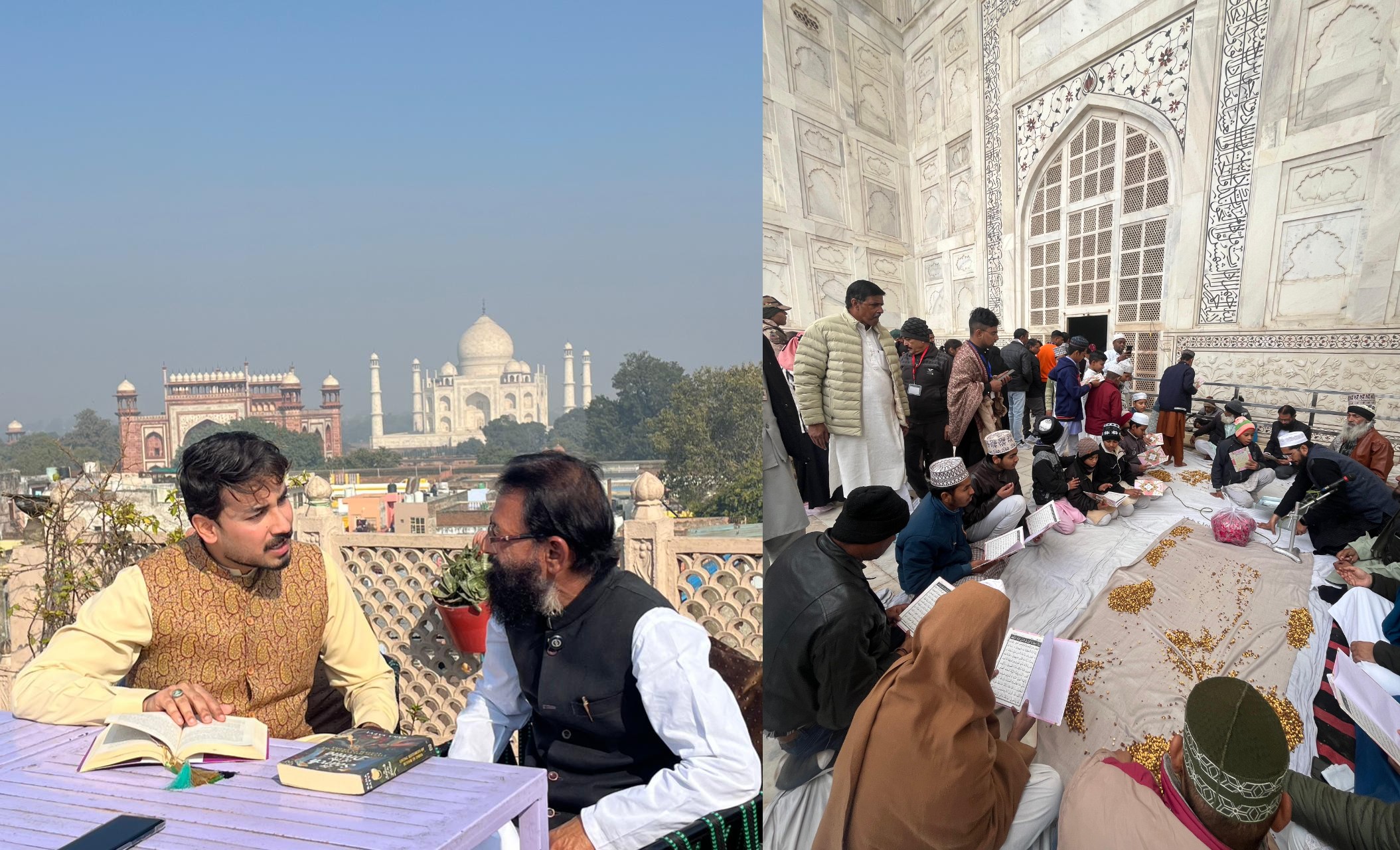
In a moment of rare calm in Agra, I felt as though Emperor Shah Jahan himself was seated close to me, while the presence of Begum Mumtaz Mahal lingered like a flower silently releasing its fragrance into the air. As I recited the kalma, my voice trembled, and tears flowed from my eyes without restraint. It was a spiritual experience unlike anything I had ever felt before—and one I may never feel again.
The occasion was the 371st Urs of the Mughal Emperor Shah Jahan (A‘la Azad Abul Muzaffar Shahab-ud-Din Muhammad Shah Jahan, 1592–1666), observed annually at the Taj Mahal.
Historical Background
Emperor Shah Jahan passed away on 22 January 1666 in Agra. Following his death, he was laid to rest beside his beloved wife Arjumand Banu Begum, Mumtaz Mahal (1593–1631), in the subterranean chamber of the Taj Mahal. Constructed between 1632 and 1653, the Taj Mahal is not merely a mausoleum but the finest expression of Mughal artistic brilliance and spiritual imagination.
I first learned about Shah Jahan’s Urs from historian Rana Safvi during our visit to the DAG Taj Museum exhibition, “The Mute Eloquence of the Taj Mahal.” From that moment, I felt a deep desire to attend the Urs and experience this living heritage firsthand.
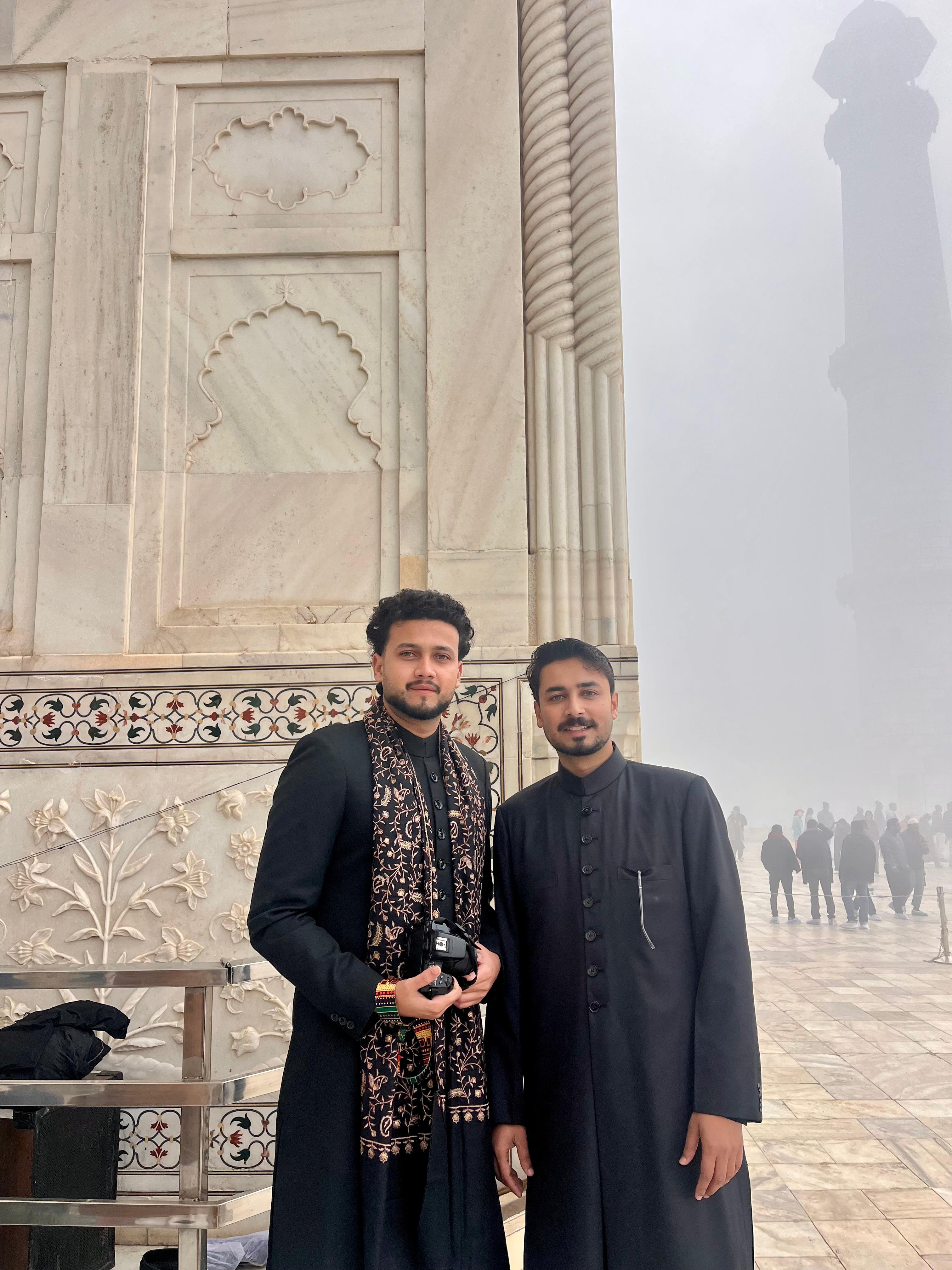
When I shared this with my brother Syed Raza Haider, a BBA student at Aligarh-based Al-Barkaat Institute of Management Studies, he explained the Urs’s history and traditions in detail. Together, we resolved to attend the Urs scheduled for 2026.
Rituals and Traditions of the Urs
We later met Syed Ibrahim Husain Zaidi, (President and Organizer, Shah Jahan Urs Celebration Committee), who explained that the Urs spans three days, beginning with rituals marked by great dignity and reverence.
Day One:
The underground chamber of the Taj Mahal is opened, where the actual graves of Shah Jahan and Mumtaz Mahal, located approximately 30 feet below ground level—are situated. The ritual bathing (ghusl) of the graves is performed, followed by Qur’anic recitation, transforming the atmosphere into one of profound spirituality.
Day Two:
The sandal ceremony takes place, a significant tradition rooted in Mughal and Sufi customs.
Day Three:
In the morning, chickpeas are distributed, Qur’an khwani is performed, prayers are offered, and finally, ceremonial chadors are laid upon the graves.
Witnessing and experiencing these rituals was an extraordinary experience for me. My younger brother, Syed Raza Haider, documented the entire process on camera so that these moments might live beyond memory.
Urs, Sufism, and Emperor Shah Jahan
In one of her vlogs, Rana Safvi notes that the chador ceremony begins at the tomb of Hazrat Bukhari, the Sufi saint appointed by Shah Jahan to oversee Mumtaz Mahal’s grave. From there, the procession visits several shrines before reaching the Taj Mahal.
Art historian Ebba Koch records that during Shah Jahan’s reign, Mumtaz Mahal’s Urs was observed annually, and it is likely that as long as the Mughal Empire endured, the Urs of both the Emperor and the Empress continued. Over time, however, the practice gradually fell into disuse.
The word “Urs” literally means wedding. In Sufi philosophy, death is understood as wisal, a spiritual union with God.
Few people are aware that Shah Jahan himself possessed a deeply Sufi temperament. Kucha Chelan in Delhi derives its name from the fact that many of his disciples (chelas) resided there.
In his book Waqiaat-e-Darul Hukumat Dehli, Maulvi Basheeruddin Ahmed writes that Shah Jahan was deeply devout, regular in prayer, diligent in observing fasts, and consistent in performing tahajjud. It was for this reason that he alone was considered worthy of laying the foundation stone of the Jama Masjid in Delhi (1656).
The Urs Day and the Inner World of the Taj Mahal
On the day of the Urs, entry to the Taj Mahal is free. The lower chamber, which houses the secondary cenotaphs, is opened to visitors. Offerings of green chadors, flowers, and donations are placed on both graves.
The larger grave on the left belongs to Emperor Shah Jahan, while the smaller one at the centre belongs to Begum Mumtaz Mahal, together in death, just as they were united in life.
A Love Beyond the Mausoleum
Throughout this experience, one observation brought profound peace to my soul, even as tears streamed from my eyes continuously for nearly four hours. I realised that the love for the Taj Mahal, or rather for Shah Jahan and Mumtaz Mahal, is not confined to a chosen few. It belongs to the entire heart of India.
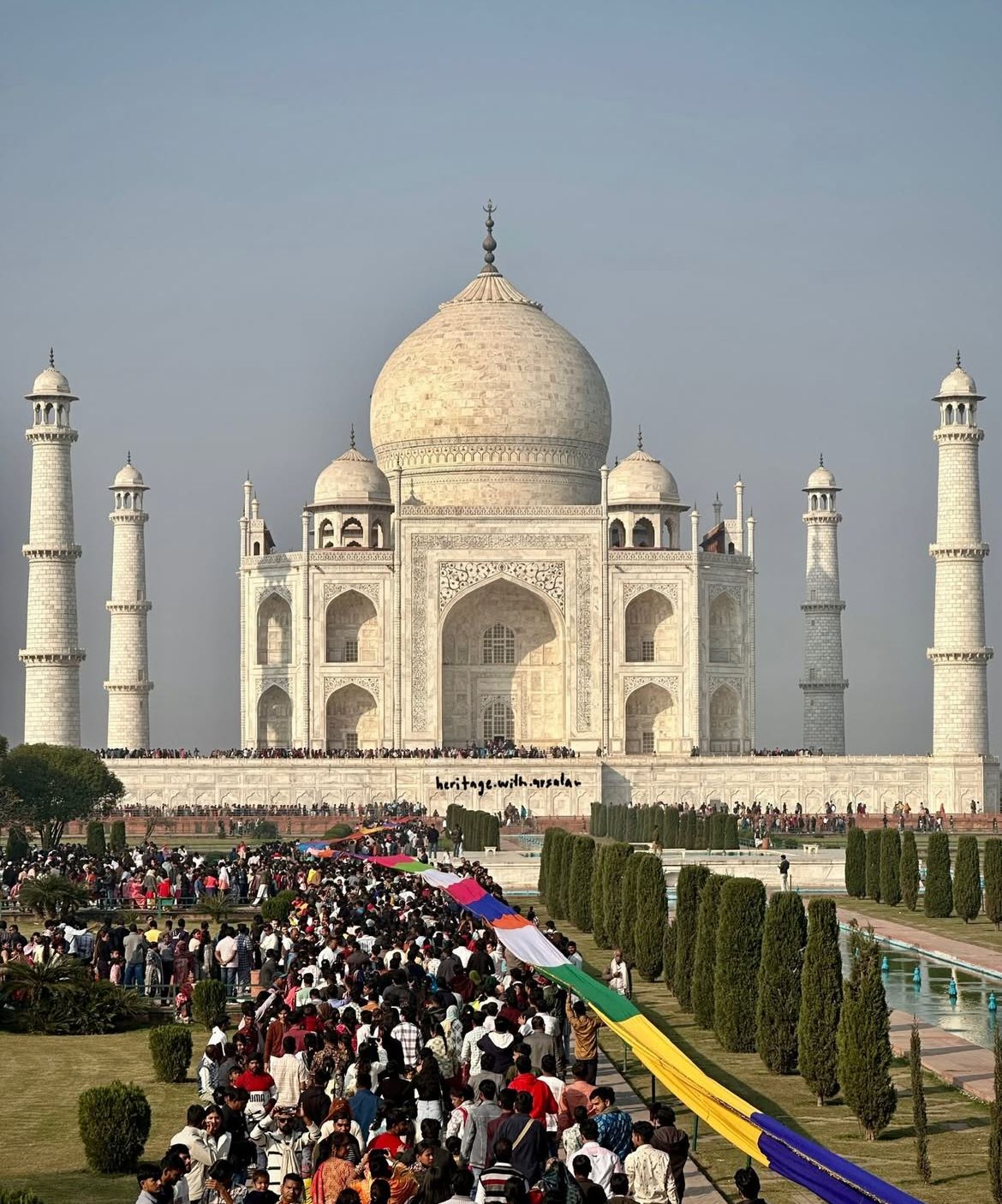
On the day of the Urs, people of every faith, language, and identity filled the Taj Mahal complex. Holding flowers and chadors, they stood in long queues—numbering in the thousands—many waiting two to three hours simply for a moment of ziyarat, a silent glimpse of the Emperor’s resting place. This scene bore witness to the fact that the story of Shah Jahan and Mumtaz Mahal is not merely one of royal romance, but a shared cultural inheritance that transcends religion and borders.
When the World Dresses in the Colours of the Taj
Another deeply moving sight was the presence of foreign visitors who had consciously chosen to wear traditional Indian attire. Many women were dressed in elegant sarees, adorned with traditional jewellery, embracing Indian culture with respect and sincerity. They had not come merely to see the Taj Mahal; they had come to experience the spirit of the Urs.
Among them was an elderly woman who remains etched in my memory. She was 93 years old, from America, and despite being confined to a wheelchair, she attends Shah Jahan’s Urs every year. Her determination, patience, and devotion were profoundly inspiring. Her presence affirmed that the Taj Mahal is not simply a masterpiece of stone and marble,it is a living spiritual centre, free from the limitations of age, nationality, and the physical body.
On that day, the Taj Mahal was no longer just a chapter in Mughal history. It became a shared human sanctuary,where love, reverence, and devotion merged into one.
Popular Categories
Read More Articles
Politics
Munich Comes To Delhi: India's Seat At The Global High Table by Abhishek Tandon October 14, 2026
Education
CSR initiatives give Bahraich govt schools an infrastructure boost by Awadh 360° Desk October 5, 2026
Technology
Dyson’s new Rs 47,000 toothbrush can ‘see’ between your teeth. Would you pay? by Awadh 360° Desk September 3, 2026
Politics
Seven Streams, One Goal: Inside PM Modi's 'Saptadhara' Vision To Build A Viksit Bharat by Abhishek Tandon August 30, 2026